
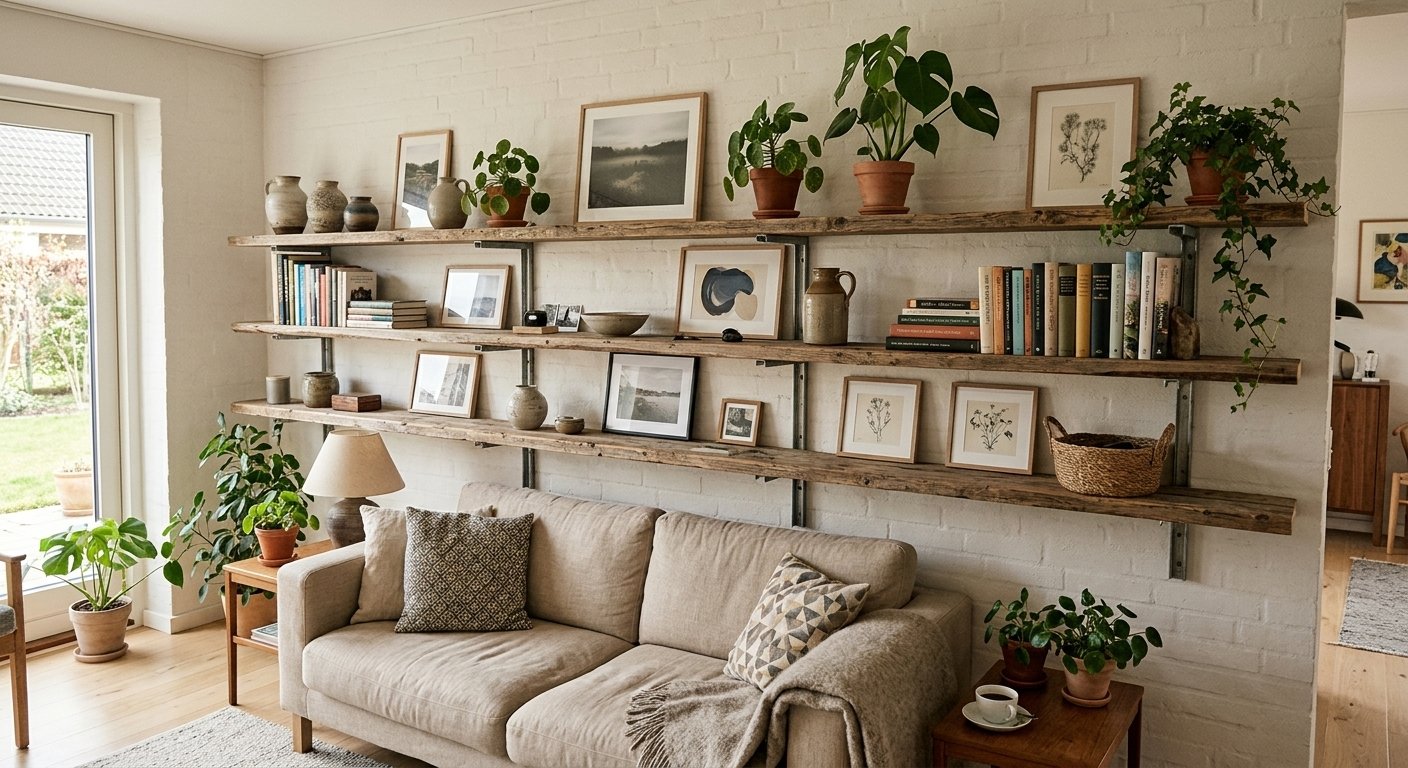
Some interior design words travel well beyond their home country, and trallehylde is one of them. Search for it today and you will find rustic wooden wall shelves, reclaimed scaffold boards, oak designs with black spacers, and even a few confusing online guides that describe something quite different. This article clears that up. You will learn what a trallehylde actually is, where the idea comes from, what it costs, how to hang it safely, how to look after it, and where it works best in a home.
What Does Trallehylde Mean?
Trallehylde is a Danish word made of two parts. Hylde means shelf. Tralle, in this context, refers to a plank-style board of the kind used on building scaffolds. Put together, a trallehylde is a wooden wall shelf, most often a rustic one cut from reclaimed scaffold boards.
Danish makers use the word in exactly this way. One Copenhagen-area workshop describes its trallehylde as a raw, weathered shelf built from original scaffold planks, each with its own patina. Another maker explains that its shelves are cut from a small piece of a tralle, then cleaned, sanded, burned, and lacquered so the wood grain stands out. In both cases the shelf is a wall-mounted board with a worn, industrial character.
Why Online Guides Disagree
If you have read other articles about this topic, you may have noticed that they do not agree. Some describe a trallehylde as a shelf made from several parallel slats. Others translate the name as a “shelf on a trolley” and describe a movable unit. When you look at what Danish furniture makers actually sell under the name, the picture is much more consistent. The product is a wall shelf made from a thick plank, usually reclaimed wood. So if you are shopping, use the Danish retail meaning as your guide, and read each product description carefully before you order.
Where the Design Comes From
The appeal of the trallehylde starts with its raw material. Scaffolding is the temporary framework that builders use to reach high parts of a structure, and its working platforms are made from sturdy boards that take a great deal of wear (you can read more about how these structures work in this overview of scaffolding on Wikipedia). After years on building sites, those boards pick up scratches, colour variations, and marks that no factory can copy.
Designers noticed that the same wear made the wood interesting. Instead of throwing old boards away, makers began to cut, sand, and finish them into furniture and shelves. This fits neatly with the wider Nordic preference for natural materials, simple shapes, and objects with a story. A trallehylde is practical, but it is also a small piece of recycling that happens to look good on a wall.
Key Features of a Trallehylde
Although every maker has a slightly different style, most versions share a few traits:
- Reclaimed or natural wood. Many are made from used scaffold boards, while others use new solid oak.
- Visible character. Knots, scratches, and colour changes are part of the design, so no two shelves look the same.
- Chunky, simple profile. The shelf is thick and plain, with no ornate edges.
- Industrial mounting. Brackets are often left visible on purpose and form part of the look. One retailer notes that the brackets on its trallehylder can be a visible piece of the industrial design, while hidden brackets are more typical of floating shelves.
- Choice of length and finish. Many makers offer several lengths, and some add oil options such as clear, white, brown, or black.
Sizes, Weight, and Typical Prices
Sizes vary by maker, but the examples below give a realistic picture. One Danish workshop lists a trallehylde measuring 15 cm deep and 120 cm long. Another lists a model measuring 110 by 30 by 5.8 cm that weighs about 5.2 kg. Because the boards are reclaimed, small differences from the product photo are normal.
Prices listed by Danish sellers range from roughly 495 DKK for a small, recycled piece up to about 1,295 DKK for a larger, untreated spruce version, with oak designs sitting in between. These figures were taken from retailer pages at the time of writing and can change, so always check the current price before buying.
Where to Use a Trallehylde
A trallehylde is flexible enough for almost any room.
Living room. Use it for books, a plant, framed photos, or a speaker. It also makes a handy landing place for remote controls beside the television. If you are tired of juggling several of them, our guide to the GE universal remote shows how to control a whole entertainment setup with one handset.
Kitchen. A sturdy plank shelf can hold spice jars or cookbooks. Keep it away from direct splashes.
Hallway. Add hooks, or pair the shelf with leather straps, and you have a simple spot for keys, post, and a small bowl.
Outdoor corners. One seller says its untreated shelf can be used inside or outside, but recommends leaving it outdoors only during summer, because weather and wind will wear it down.
How to Hang a Trallehylde Safely
Because these shelves are thick and heavy, installation matters more than it does for a lightweight shelf. Follow these steps:
- Choose the position. Hold the shelf against the wall and mark the height with a pencil. Think about what you will place on it and how much headroom you need.
- Check your wall type. Brick, concrete, plasterboard, and timber stud walls all need different fixings. Use plugs and screws made for your specific wall.
- Locate studs where possible. If you are mounting into a plasterboard wall, fixing into a stud gives much stronger support than plasterboard alone.
- Use a spirit level. Mark the bracket holes with the level in place so the shelf does not slope.
- Drill, plug, and fix. Attach the brackets firmly first, then place the shelf on top and secure it to the brackets.
- Test before loading. Press down gently on the shelf and check it feels solid before you add books or ornaments.
The seller’s stated weight limit is the best guide for how much a particular shelf can carry, so ask them if the product page does not say.
Caring for Your Trallehylde
Reclaimed wood is tough, but it still benefits from basic care.
- Dust regularly with a dry or slightly damp cloth.
- Avoid soaking the wood. Wipe up spills quickly, especially in kitchens.
- Re-oil when it looks dry. A light coat of wood oil or wax refreshes the surface and protects it. If your shelf is already lacquered, follow the maker’s advice instead.
Quick Buying Tips
Check the material, exact size, bracket type, finish, and stated weight limit before you order. One workshop quotes about a week for delivery.
Can You Make One Yourself?
Yes, if you have basic woodworking tools. Find a thick reclaimed board, sand it, and finish it with oil or lacquer, then add strong brackets suited to your wall. Used scaffold boards can be damaged or contaminated, so inspect them carefully and wear protection when cutting and sanding.
Styling Ideas
Keep the display simple. A trallehylde already has a lot of character, so you do not need to crowd it.
- Stack two or three books and add a small plant on top.
- Lean a framed print at the back for height.
- Stay with natural colours such as white, grey, green, and black.
If you enjoy following what people are looking at online this year, our roundup of what’s trending right now in 2026 is a good place to continue.
Frequently Asked Questions
What does trallehylde mean? It is a Danish word that combines tralle (a scaffold-style plank) and hylde (shelf). In Danish shops it describes a rustic wooden wall shelf, usually made from reclaimed scaffold boards.
Is a trallehylde the same as a floating shelf? Not exactly. A floating shelf usually hides its brackets. A trallehylde often shows its brackets as part of an industrial look, although a few modern versions use cleaner mounting.
Is a trallehylde strong enough for books? A well-made one, fixed correctly to a suitable wall, is generally sturdy. Check the weight limit given by the seller and use fixings that match your wall.
What wood is best? Reclaimed scaffold board gives the most rustic look, while solid oak offers a cleaner, more refined finish. Pick based on your style and budget.
Can I use a trallehylde in a kitchen or bathroom? In a kitchen, yes, as long as you keep it away from heavy splashes and wipe it down. In a bathroom, only use it where there is good ventilation and little direct water contact.
How much does a trallehylde cost? Danish retailers list prices from around 495 DKK to about 1,295 DKK, depending on size, material, and finish.
Conclusion
A trallehylde is a simple idea that works well: a thick wooden wall shelf, often made from reclaimed scaffold boards, with plenty of texture and a quiet industrial feel. It suits living rooms, kitchens, hallways, and studies, and it asks for little more than secure fixing and occasional care. If you want a shelf with real character that also makes good use of old timber, a trallehylde is a smart choice. Measure your wall, check the maker’s weight guidance, and pick a finish that matches your room, and you will have a lasting piece that looks better with age.