Ponas Robotas: The Complete Guide to AI Robotics, Smart Machines & the Future of Human-Robot Collaboration (2026)
Two Words That Changed How We See Machines
Have you ever come across the phrase Ponas Robotas and wondered what it means? If you typed it into a search engine, you probably got a mix of TV show references, AI articles, and robotics blogs. That is not a coincidence — it is because this simple two-word Lithuanian phrase sits at the crossroads of culture, language, and one of the most exciting technological revolutions of our time.
In Lithuanian, “Ponas” means “Mr.” or “Sir” — a respectful title given to a gentleman. “Robotas” simply means “robot.” Put them together and you get Ponas Robotas: Mr. Robot. What started as the Lithuanian title of a globally celebrated television series has now grown into a powerful symbol for the entire intelligent robotics movement reshaping our world in 2026.
This guide covers everything you need to know — the meaning and origin of Ponas Robotas, its cultural connections, the real-world AI technologies behind it, the industries it is transforming, the challenges it brings, and what the next decade holds for humanity’s relationship with intelligent machines.
Read More: Diag Image: Transforming Healthcare Diagnosis
What Does Ponas Robotas Mean?
The phrase Ponas Robotas is rooted in the Lithuanian language, spoken by approximately three million people in Lithuania and across the Lithuanian diaspora worldwide. Lithuanian is one of the oldest living Indo-European languages, known for preserving ancient features that other languages have lost over centuries.
Breaking it down:
- Ponas — the standard polite title for a man, equivalent to “Mr.” or “Sir” in English
- Robotas — the Lithuanian word for “robot,” derived from the same root as most European languages
Together, Ponas Robotas literally translates to “Mr. Robot” — a phrase that attaches a human, dignified title to a machine. This linguistic choice is not accidental. It reflects a broader cultural tendency to humanize technology that we interact with closely and trust in our daily lives.
Think about how people name their Roomba vacuum cleaners, talk to their smart speakers, or treat AI assistants as if they have personalities. That instinct to personify machines is exactly what Ponas Robotas captures — and why the phrase resonates far beyond its two-word meaning.
Read More: Reaper Scans: Powerful Boost Or Hidden Problem? Unlock The Secrets To Efficient Audio Production
The TV Series Connection: How a Show Shaped a Movement
To understand why Ponas Robotas became a significant cultural and technological term, you need to understand the television series that brought it into mainstream conversation.
Mr. Robot — known in Lithuania as Ponas Robotas — was an American psychological thriller that aired on USA Network from 2015 to 2019. The series follows Elliot Alderson, a brilliant but deeply troubled cybersecurity engineer who works by day for a tech security firm and operates by night as a vigilante hacker. He is recruited by a mysterious anarchist group called fsociety that aims to bring down corporate power by destroying financial data.
What made Ponas Robotas different from every other tech-themed show before it was its authenticity. The hacking depicted in the series was real. The social engineering, privilege escalation, and system vulnerabilities shown on screen were actual techniques used by cybersecurity professionals. Millions of viewers, including in Lithuania where the show was known as Ponas Robotas, were exposed for the first time to genuine conversations about:
- Digital surveillance and how corporations track user behavior
- Data privacy and who actually owns the information we generate
- Corporate control of technology and the power it gives to a small number of entities
- Mental health in a hyper-connected, always-online world
The show sparked a generation of thinkers, hackers, and tech enthusiasts to ask: who controls the machines? That question, first raised by a fictional TV series, is now the central ethical debate of the real-world intelligent robotics age.
By 2024, tech blogs across Eastern Europe began borrowing the phrase Ponas Robotas to describe real AI-powered robotic assistants. By 2025, English-language publications followed. In 2026, it is a globally recognized shorthand for the new generation of intelligent, adaptive machines that live and work alongside humans.
The AI Technology Powering Modern Ponas Robotas Systems
The reason Ponas Robotas has become synonymous with smart robotics is because modern intelligent robots genuinely deserve a respectful title. They are no longer simple machines that follow fixed programs. They observe, learn, decide, and improve — and they do it continuously.
Here are the core technologies that power today’s Ponas Robotas systems:
1. Machine Learning
Machine learning allows robots to analyze patterns from every interaction and use that data to improve future performance. A robot vacuum that uses machine learning does not just follow a random cleaning path. It maps your home layout, learns where dust accumulates most, identifies obstacles, and refines its route over time to clean more efficiently with every session.
This continuous improvement without reprogramming is what separates modern intelligent robots from the industrial machines of the past.
2. Natural Language Processing (NLP)
Natural language processing enables robots to understand and respond to human speech in a genuinely conversational way. Users do not need to memorize command structures or speak in rigid patterns. They speak naturally, and the robot understands context, tone, and intent.
In 2026, NLP capabilities in consumer robots have advanced to the point where a home assistant can understand follow-up questions, remember preferences from previous conversations, and respond in a way that feels less like talking to a machine and more like talking to a knowledgeable assistant.
3. Computer Vision
Computer vision gives robots the ability to see and interpret the world around them. Cameras, depth sensors, and LiDAR technology allow a Ponas Robotas system to map environments in real time, identify objects and people, avoid obstacles, detect anomalies like unfamiliar faces or unusual movement, and navigate dynamic, unpredictable spaces.
This is the technology that allows a delivery robot to navigate a busy warehouse floor without collisions, or a home assistant robot to recognize that a child has left a toy in a high-traffic area and avoid it accordingly.
4. Reinforcement Learning
Reinforcement learning takes machine learning a step further. A robot using reinforcement learning improves its own actions through trial and experience. Each attempt at a task provides data, and the system uses that data to make the next attempt more accurate. Research shows that some robotic systems improve a specific pick-and-place task by measurable percentages after hundreds of attempts — without any human reprogramming.
5. Cloud Computing Integration
Modern Ponas Robotas systems connect to cloud computing platforms that allow them to process complex information remotely. This means the robot itself does not need enormous onboard processing power. Instead, it offloads heavy computational tasks to cloud servers, receives back processed results, and acts on them in real time.
This architecture makes advanced AI capabilities available in affordable, compact hardware — which is a significant reason why intelligent robots have moved from research facilities into living rooms.
How Ponas Robotas Is Transforming Industries
The impact of intelligent robotics in 2026 is not limited to home cleaning devices. Ponas Robotas-style systems are reshaping entire industries in ways that are already measurable and significant.
Healthcare
In healthcare settings, intelligent robots are improving outcomes across multiple areas. Surgical robots allow for minimally invasive procedures with precision that human hands alone cannot consistently achieve. Rehabilitation robots assist stroke and injury patients in regaining movement through guided, adaptive therapy sessions. Care robots in nursing facilities monitor elderly patients, provide medication reminders, detect falls, and alert medical staff when intervention is needed.
The impact on patient outcomes and healthcare worker wellbeing is significant. Nurses who previously performed repetitive physical tasks — like lifting and repositioning patients — report fewer injuries and more time for the higher-level care activities that require genuine human judgment and compassion.
Manufacturing and Industrial Automation
The manufacturing sector has used robots for decades, but the Ponas Robotas generation represents a fundamental shift. Where older industrial robots operated in isolated, caged environments performing single repetitive tasks, modern collaborative robots — known as cobots — work directly alongside human workers on shared assembly lines.
These cobots can sense when a human is nearby and adjust their movements accordingly, preventing accidents without sacrificing productivity. They can switch between tasks based on production needs, receive updated instructions through natural language, and flag issues for human review in real time.
Logistics and Warehousing
The global logistics sector faces persistent labor shortages and increasing demand driven by e-commerce growth. Intelligent robotic systems are filling that gap at scale. Warehouse robots now handle inventory management, order picking, package sorting, and last-mile delivery preparation with a speed and accuracy that consistently outperforms manual processes.
The result is faster order fulfillment, lower error rates, and reduced physical strain on human warehouse workers who can shift to supervisory and quality control roles.
Education
In education, Ponas Robotas systems are serving as personalized AI learning companions. These robots can deliver adaptive feedback based on individual student performance, adjust the difficulty of exercises in real time, provide patient and consistent tutoring support for students who need extra time, and offer interactive engagement that holds attention more effectively than passive learning formats.
Early pilots of educational robot assistants in schools across Europe and Asia show measurable improvements in student engagement and performance in subjects like mathematics and language learning.
Smart Homes and Personal Assistance
For everyday consumers, the Ponas Robotas experience is most visible in the home. Beyond vacuum cleaners, intelligent home robots in 2026 handle floor mopping, lawn maintenance, window cleaning, grocery tracking, and personal scheduling assistance. For elderly individuals living independently, these robots provide mobility support, medication management, fall detection, and companionship — significantly extending the period during which seniors can live safely at home without requiring full-time care.
The Market Numbers: Why Ponas Robotas Is Growing Fast
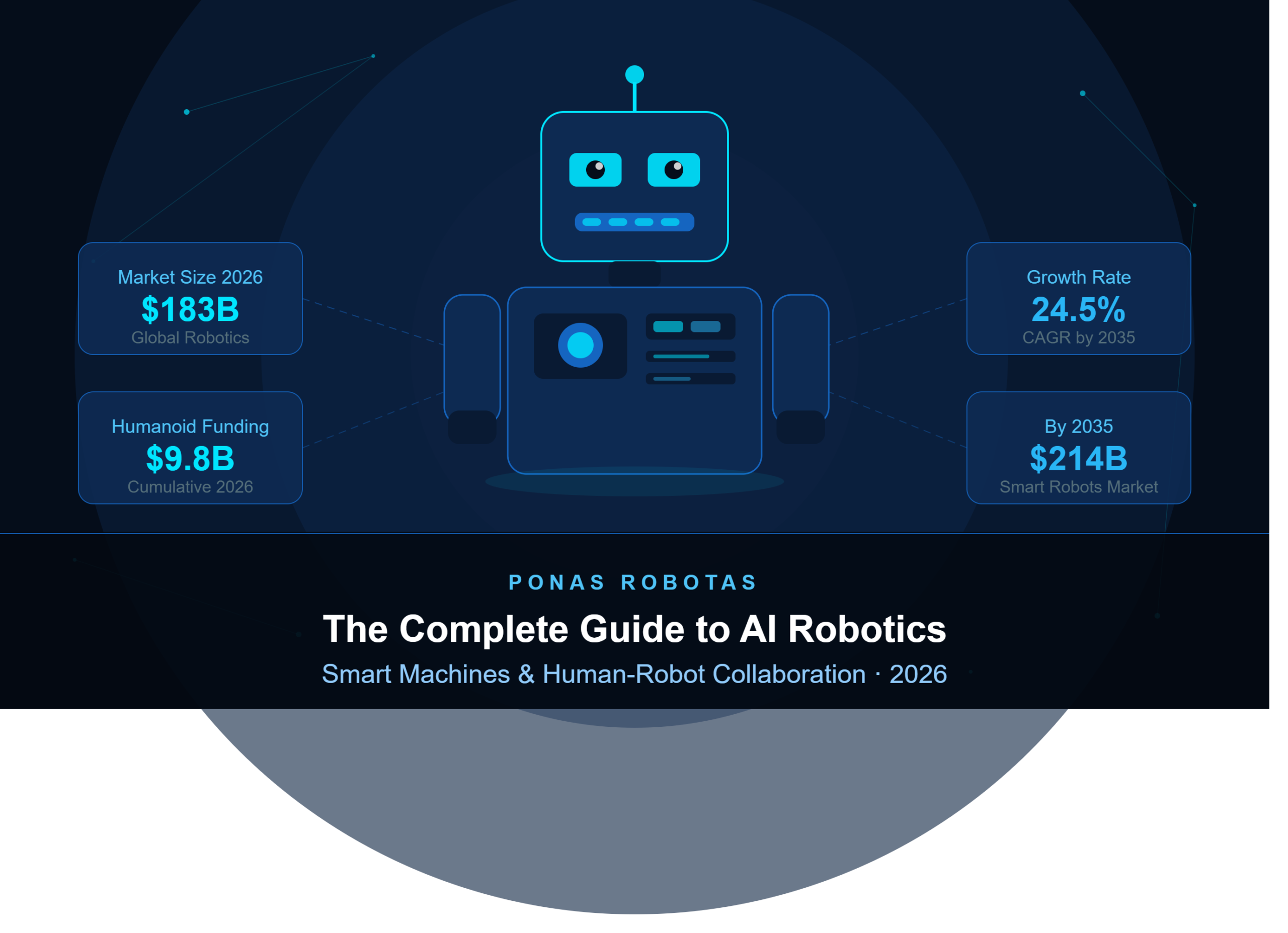
The commercial data confirms that intelligent robotics is one of the defining growth sectors of this decade. The global smart robots market surpassed USD 23.92 billion in 2025 and is projected to reach USD 214.02 billion by 2035, representing a compound annual growth rate of approximately 24.5%.
Industry analysts have identified 2026 specifically as the inflection year for consumer humanoid robots — the point when humanoid robot manufacturers pivot from industrial and commercial pilots to genuine consumer and home market applications. Cumulative industry funding for humanoid robot development has already exceeded USD 9.8 billion, with major technology companies committing billions more to accelerate development and reduce unit costs.
For context, this growth trajectory is comparable to the early years of the smartphone market. What feels like an emerging technology today is likely to be a standard household fixture within a decade.
Ethical Challenges and the Questions We Must Answer
The same television series that gave Ponas Robotas cultural significance also gave us its most important warning. The fictional Elliot Alderson spent four seasons exposing what happens when powerful technology operates without accountability. The real-world intelligent robotics industry faces parallel questions that society must take seriously.
Data Privacy
Ponas Robotas systems collect enormous amounts of data about the environments and people they operate in. Cameras, microphones, and sensors in a home robot generate detailed records of daily life, behavioral patterns, health indicators, and personal conversations. Who owns that data? How is it stored? Who can access it? These questions do not yet have universally agreed answers, and the regulatory landscape varies significantly by country and region.
Job Displacement
Automation has always changed the nature of work, and intelligent robotics will continue that pattern at an accelerating pace. While new roles in robot maintenance, programming, AI development, and oversight will be created, the transition period for workers displaced from roles that robots can now perform will require genuine investment in retraining programs and social support systems.
Algorithmic Bias
The AI systems that power Ponas Robotas learn from data. If that data reflects historical human biases — in hiring, in healthcare access, in law enforcement — the robot systems will reproduce and potentially amplify those biases. Responsible development requires active work to identify and correct bias in training data before systems are deployed at scale.
Accountability
When an intelligent robot makes a decision that causes harm — a medical robot that errs during a procedure, a warehouse robot that injures a worker, a care robot that fails to detect a medical emergency — who is responsible? The manufacturer? The operator? The AI developer? Clear legal and ethical frameworks are still being developed, and their quality will determine how safely society can integrate these technologies.
The Future of Ponas Robotas: What the Next Decade Holds
Looking ahead to 2030 and beyond, the trajectory of intelligent robotics points toward capabilities and applications that are already visible on the horizon.
Emotional AI — systems capable of recognizing and responding to human emotional states — is advancing rapidly. Robots that can detect stress, frustration, or sadness through voice tone, facial expressions, and behavioral patterns will be far better equipped to serve in caregiving, education, and customer-facing roles.
Augmented reality integration will create new forms of human-robot collaboration, where digital overlays and robotic physical assistance combine to extend human capabilities in both professional and personal contexts.
Reduced unit costs driven by manufacturing scale and component improvements will make home robots accessible to a much broader economic range of consumers, replicating the democratization that occurred with smartphones.
Stronger regulatory frameworks are already being developed in the European Union, United States, and major Asian markets. These frameworks will increase consumer confidence and create clearer standards that allow the industry to grow responsibly.
Conclusion: Why Ponas Robotas Matters
Ponas Robotas began as a translation — two Lithuanian words for “Mr. Robot” that brought a globally beloved television series to local audiences. It became a cultural symbol that captured a generation’s complex relationship with technology, surveillance, and corporate power.
Today, in 2026, it represents something more concrete and more immediate: the arrival of intelligent machines as genuine participants in human life.
These are not the cold, rigid automatons of science fiction. The Ponas Robotas systems transforming homes, hospitals, warehouses, and classrooms in 2026 learn, adapt, communicate, and improve. They carry out tasks humans find dangerous, repetitive, or simply inconvenient. They provide companionship to the elderly, precision to surgeons, efficiency to logistics operations, and patience to students who need more time to understand a concept.
The word “Ponas” — that respectful title, that acknowledgment of dignity — is the key to understanding why this phrase resonates. We are not just building better machines. We are building machines that deserve to be treated as something more than tools. And in doing so, we are being forced to define, more clearly than ever, what it means to be human in a world where the line between human intelligence and machine intelligence grows less distinct with every passing year.
The future is not about robots replacing humans. The future of Ponas Robotas is about humans and machines working together — each doing what they do best, each making the other more capable.
That is a future worth understanding, preparing for, and shaping with wisdom.
Frequently Asked Questions About Ponas Robotas
What does Ponas Robotas mean in English? Ponas Robotas is a Lithuanian phrase that directly translates to “Mr. Robot” in English. “Ponas” means “Mr.” or “Sir” and “Robotas” means “robot.”
Is Ponas Robotas a real product or brand? No single product or company officially bears the name Ponas Robotas. The phrase has been adopted as a general descriptive term for AI-powered smart robotic assistants, much like how “Kleenex” became a general term for facial tissues.
What is the connection between Ponas Robotas and the TV show Mr. Robot? Ponas Robotas is the official Lithuanian title for the American psychological thriller series Mr. Robot (2015–2019). The show’s themes of technology, surveillance, and corporate control helped establish the phrase as culturally significant before it was later adopted as shorthand for real-world intelligent robotics.
How much does a Ponas Robotas-style home robot cost in 2026? Entry-level intelligent home robots start under USD 1,000, with mid-range models offering multi-room navigation, voice control, and smart home integration. Advanced humanoid home assistants currently in early commercial release are significantly more expensive, though prices are expected to decrease as manufacturing scale increases.
What industries are using Ponas Robotas technology? Healthcare, manufacturing, logistics and warehousing, education, agriculture, and smart home applications are all actively integrating intelligent robotic systems in 2026.
What are the main concerns about Ponas Robotas robots? The primary concerns include data privacy from constant sensor data collection, potential job displacement for workers in roles that robots can now perform, algorithmic bias in AI training data, and the need for clear accountability frameworks when robotic systems cause harm.