If you have seen an ad for the Signal Relief Patch, you have probably wondered whether a small wearable patch can really switch off back, knee or joint pain without drugs. The promise is attractive, and search results are full of glowing reviews. The problem is that many of those reviews contradict each other, and independent scientific support is hard to find.
This guide explains what the Signal Relief Patch claims to be, how its technology is described, what the evidence says, and which red flags to check before you spend money. It is general information, not medical advice.
What Is the Signal Relief Patch?
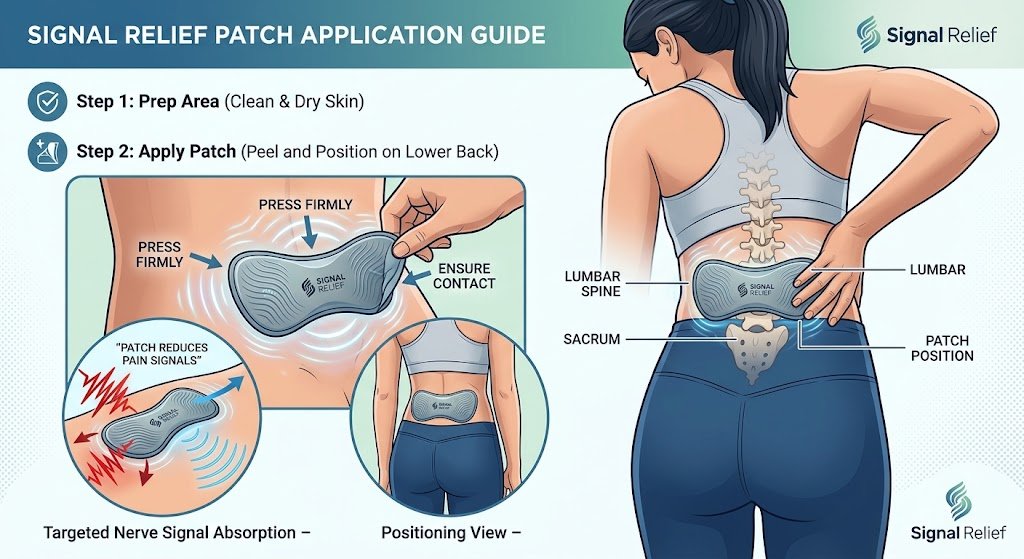
The Signal Relief Patch is a wearable patch marketed for back pain, knee pain and other chronic aches. Sellers describe it as a drug-free, reusable product that uses nano-scale components to interfere with the electrical signals that carry pain messages from nerves to the brain. A 2021 critique in Science-Based Medicine noted that its marketing used the phrase “neuro capacitative coupling” and claimed the design came from elite military research.
Unlike a medicated patch, it is not described as releasing any substance into your body. That matters, because it changes the kind of proof you should expect. A transdermal patch, such as a nicotine or hormone patch, delivers a measured dose of medicine through the skin, and that dose can be tested. A patch that claims to work without any active ingredient needs a different standard: well-run trials that compare it with an identical sham (placebo) patch.
How the Patch Is Said to Work
According to the sales material and reviews we read, the patch contains tiny capacitor-like components. You place it over the painful area, and it supposedly “quiets” pain signals within minutes. Most descriptions say the effect lasts for hours and that the patch can be reused.
The details are inconsistent. One widely shared review says the patch has no adhesive in one paragraph and describes it sticking to the skin in another. The same review gives the relief time as both 8 and 16 hours. When basic facts change from paragraph to paragraph, it is hard to trust the rest.
Who Is the Signal Relief Patch Marketed For?
The advertising targets people with long-lasting, everyday pain: desk workers with a sore lower back, runners with tired knees, older adults with stiff joints, and anyone tired of tablets and creams. It is also pitched at people who worry about side effects from oral painkillers.
That audience is exactly why careful reading matters. Chronic pain can be exhausting, and people in pain are more likely to try something that sounds simple. A product that is cheap to try can still cost you time if it delays proper care.
What Does the Evidence Say?
The strongest independent source we found is a March 2021 article by Harriet Hall, MD, on Science-Based Medicine. She reviewed Signal Relief alongside two similar “energy” patches and concluded there was no acceptable scientific evidence that any of them relieve pain. She also described the technical language used in the ads as pseudoscientific.
In the pages we checked, we could not find a named, peer-reviewed clinical trial for this patch. Some reviews mention “studies” or “experts recommend,” but they never name a study, a journal or a person. Until a proper sham-controlled trial is published, the pain-relief claims should be treated as unproven.
Some users do report feeling better, and that is worth acknowledging. Pain is strongly shaped by expectation, so many people feel relief from any product they believe in. That is exactly why placebo-controlled trials exist: they separate what the product does from what hope does.
Price, Refunds and Review Red Flags
The numbers quoted online do not match, which is a warning sign in itself.
| Detail | What sources say | Why it matters |
|---|---|---|
| Price | About $30 to $100 in one review, and $120 to $140 in a 2021 critique | Confirm the real price on the seller’s own checkout page |
| Refund window | 30, 45 and 90 days in different sources | Get the exact policy in writing before paying |
| Relief duration | 8 hours in one place, 16 hours in another | Unclear claims are hard to hold a seller to |
Watch for these red flags when you read Signal Relief Patch reviews:
- Copied pages. The same review title appears on unrelated company and school websites, which suggests mass-produced marketing content.
- Vague ingredients. Terms like “nano-tech” are used without naming any material.
- Anonymous experts. “Doctors love it” means little without names and sources.
- Unspecific complaints. Some pages mention refund delays, rashes and weak adhesive, but give no details.
- No clear disclosure. Many reviews do not say whether they earn commission from sales.
Possible Side Effects and Safety
Because the patch is worn on the skin, the most likely problems are irritation, redness or a rash, especially if it uses adhesive. Do not place any patch on broken, burned or irritated skin. Stop using it if your skin reacts.
Anyone with a pacemaker or another implanted electronic device should ask a doctor before wearing any product that claims to affect electrical signals. Pregnant people and children should also check with a healthcare professional first.
Not every pain product is harmless. In March 2024, the FDA warned consumers about certain over-the-counter lidocaine skin products with unsafe strength or use. And see a doctor promptly if your pain follows an injury, comes with numbness or weakness, fever, chest pain, or loss of bladder or bowel control. Do not rely on a patch in those cases.
How to Check Before You Buy
- Find the real seller. Buy only from the official site or a retailer you recognize, and take screenshots of the price and refund terms.
- Check the website itself. Our guide on whether an unfamiliar website can be trusted shows what to look for, from contact details to policies.
- Verify the claims. Learn how to verify unfamiliar claims and terms by tracing them back to a named source.
- Look for a named trial. If a study is mentioned, search for its title, authors and journal. If you cannot find it, treat it as a marketing claim.
- Use a protected payment method. Cards and payment services with dispute rights make refunds easier if the product is not as described.
Better-Supported Ways to Manage Everyday Pain
For common back or knee aches, these general approaches have more support than novelty patches:
- Stay gently active instead of resting for long periods.
- Use heat or cold for short stretches.
- Try stretching, strengthening or physiotherapy exercises.
- Improve your sleep, desk setup and daily posture.
- Ask a pharmacist about over-the-counter options and follow the label.
If pain lasts more than a few weeks, ask a doctor or physiotherapist for a proper assessment.
Frequently Asked Questions About the Signal Relief Patch
What is the Signal Relief Patch?
It is a reusable, drug-free wearable patch marketed for back, knee and chronic pain. Sellers say it works by disrupting pain signals, but the mechanism has not been shown in independent research.
Does the Signal Relief Patch work?
There is no strong independent evidence that it does. Some users report relief, which may be partly a placebo effect. A sham-controlled trial would be needed to know for sure.
Is the Signal Relief Patch safe?
Skin irritation is the most likely issue. People with pacemakers or other implanted devices, pregnant people and children should ask a doctor first.
How much does the Signal Relief Patch cost?
Sources quote anywhere from about $30 to $140. Check the current price and refund policy on the seller’s checkout page.
Is the Signal Relief Patch a scam?
We cannot prove fraud. However, the claims are unverified, and reviews contradict each other on price, refunds and duration. Treat the claims as unproven and read the refund terms carefully.
What should I do if my pain does not go away?
See a doctor or physiotherapist, especially if the pain follows an injury or comes with numbness, weakness or fever.
Conclusion
The Signal Relief Patch promises drug-free pain relief, but the evidence to support that promise is missing. The independent review we found rejects its scientific claims, and the online reviews are inconsistent and often look copied.
If you still want to try it, buy from the official seller, keep proof of the refund policy and stop if your skin reacts. For pain that lingers, a medical assessment is a safer path than any patch. Check claims before you trust them, and share this guide with anyone considering one.