
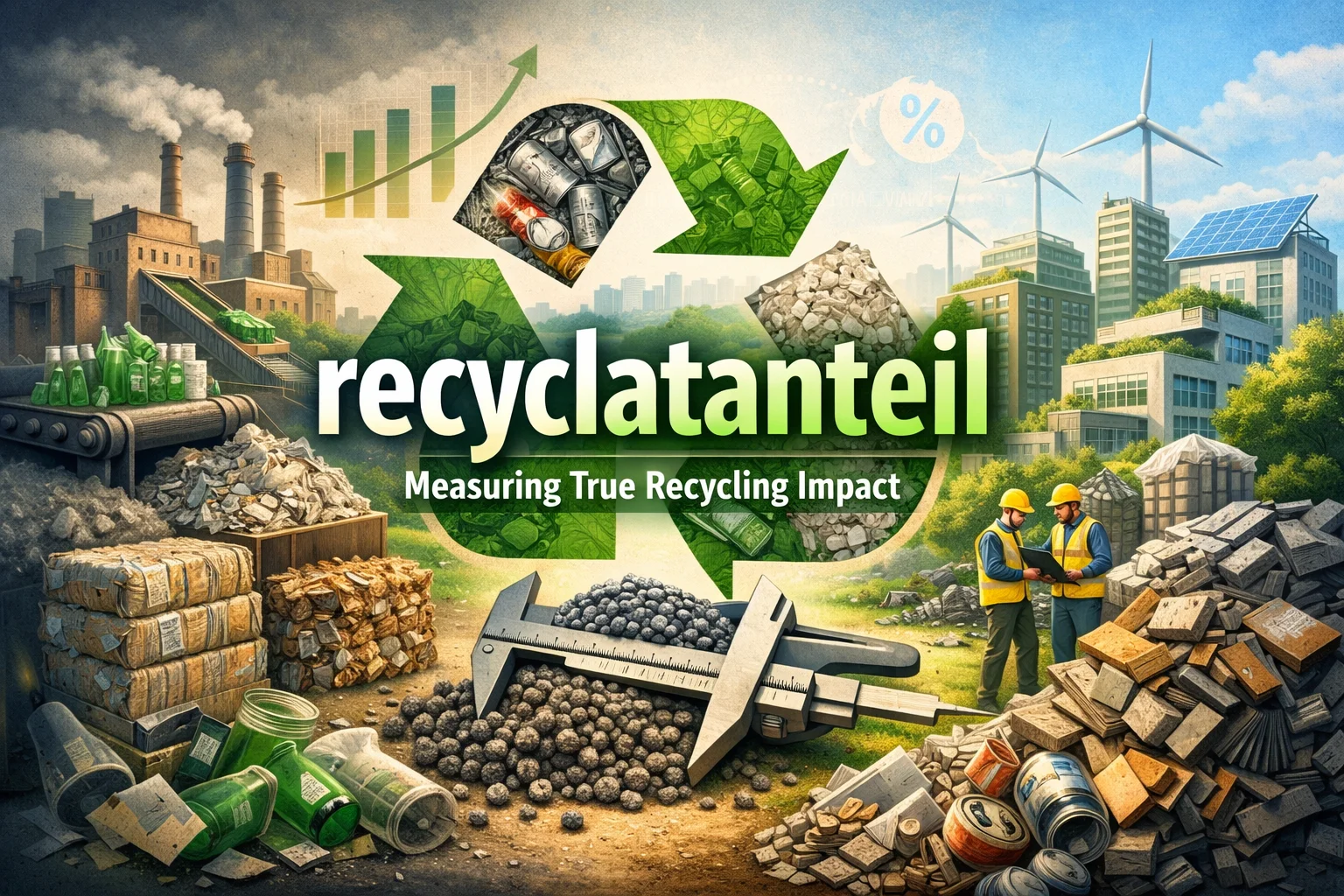
Recyclatanteil: Driving Sustainable Growth in the Circular Economy
As global environmental challenges intensify—ranging from climate change to resource depletion and rising waste levels—the need for sustainable solutions has never been greater. One of the most effective approaches to tackling these issues is the circular economy, a model designed to minimize waste and maximize resource efficiency. At the heart of this system lies an important concept: Recyclatanteil.
Recyclatanteil refers to the percentage of recycled materials used in the production of new products or packaging. Instead of relying entirely on raw, newly extracted resources, manufacturers integrate recycled materials such as plastic, metal, paper, or glass into their production processes. For instance, if a bottle is made using 40% recycled plastic, its recyclatanteil is 40%.
By increasing this percentage, industries can significantly reduce environmental impact while moving closer to a sustainable and resource-efficient future.
Read More: Diag Image: Transforming Healthcare Diagnosis
Understanding Recyclatanteil
Recyclatanteil is essentially a measure of how much recycled content is present in a product. It highlights the shift from simply collecting waste to actively reusing materials in production cycles.
This concept emphasizes that recycling alone is not enough. The true value lies in ensuring that recycled materials are actually reused in manufacturing rather than discarded after collection.
Recyclatanteil typically includes:
- Post-consumer waste: Materials recycled after being used by consumers, such as plastic bottles or aluminum cans.
- Post-industrial waste: Leftover materials from manufacturing processes that are reused instead of being discarded.
By incorporating these materials into new products, companies reduce their dependence on virgin resources and support sustainable production practices.
Why Recyclatanteil Matters in the Circular Economy
The traditional economy follows a linear path: take, make, and dispose. This approach leads to excessive waste and continuous depletion of natural resources.
In contrast, the circular economy aims to keep materials in use for as long as possible. Recyclatanteil serves as a key indicator of how well this system is working.
Higher recyclatanteil means:
- Reduced need for raw material extraction
- Better use of existing resources
- Lower environmental impact
- More efficient production systems
In simple terms, increasing recyclatanteil helps close the loop, turning waste into valuable resources instead of letting it accumulate in landfills.
Environmental Benefits of Higher Recyclatanteil
1. Preserving Natural Resources
Using recycled materials reduces the need to extract new resources such as oil, minerals, and timber. This helps prevent deforestation, habitat destruction, and resource depletion.
2. Lower Carbon Emissions
Producing goods from recycled materials typically requires less energy than using raw materials. As a result, greenhouse gas emissions are significantly reduced.
For example:
- Recycled aluminum can save up to 95% of energy compared to new production
- Recycled plastics require less energy and raw inputs
This makes recyclatanteil a powerful tool in combating climate change.
3. Reducing Waste
By reusing materials, less waste ends up in landfills or oceans. This is especially important for materials like plastic, which can take hundreds of years to decompose.
4. Strengthening Recycling Systems
When industries demand more recycled materials, it encourages investment in recycling infrastructure. This improves collection, sorting, and processing systems, making recycling more effective overall.
Industries Leading the Way
Several industries are actively increasing their recyclatanteil to improve sustainability.
Packaging Industry
Packaging is one of the largest users of recycled materials. Companies are now producing bottles, cartons, and boxes using recycled plastics and paper fibers.
Technology Sector
Electronics manufacturers are incorporating recycled metals and plastics into devices such as smartphones and laptops. This reduces reliance on mining and lowers environmental impact.
Construction Industry
Recycled materials like concrete, steel, and glass are widely used in construction projects. This approach supports sustainable urbandevelopment and reduces waste.
Fashion and Textiles
The fashion industry is adopting recycled fabrics such as recycled polyester and cotton. This helps reduce textile waste and promotes eco-friendly production.
Global Progress and Current Trends
While awareness of recyclatanteil is growing, global usage of recycled materials is still relatively low. For example, only about 12.2% of materials used in the European Union in 2024 came from recycled sources.
This shows that although progress is being made, there is still significant room for improvement. Governments and organizations are now introducing policies to increase recycled content across industries.
Challenges in Increasing Recyclatanteil
Despite its benefits, several obstacles remain:
Material Quality
Recycled materials may sometimes have lower or inconsistent quality compared to new materials.
Cost Factors
In many cases, virgin materials are still cheaper than recycled ones, making it less attractive for businesses to switch.
Limited Infrastructure
Not all regions have advanced recycling systems, which limits the availability of high-quality recycled materials.
Consumer Behavior
Improper waste sorting by consumers can reduce the effectiveness of recycling systems.
Strategies to Improve Recyclatanteil
To overcome these challenges, several solutions can be implemented:
- Design for recycling: Products should be created in a way that makes them easy to recycle
- Government regulations: Policies can enforce minimum recycled content requirements
- Technological innovation: Advanced recycling methods can improve material quality
- Public awareness: Educating consumers helps improve recycling habits
The Future of Recyclatanteil
As sustainability becomes a global priority, recyclatanteil will play an increasingly important role in shaping industries and economies. Companies that adopt recycled materials not only reduce their environmental footprint but also meet growing consumer demand for eco-friendly products.
Businesses that invest in sustainable practices and recycling technologies are likely to gain a competitive edge in the future green economy.
Conclusion
Recyclatanteil is a key driver of sustainability in the modern world. By increasing the use of recycled materials in production, industries can conserve resources, reduce waste, and lower carbon emissions.
As the global economy shifts from a linear to a circular model, recyclatanteil will remain a critical measure of progress. Governments, businesses, and individuals all have a role to play in supporting recycling systems and promoting sustainable practices.
Ultimately, improving recyclatanteil is not just about recycling—it is about creating a future where resources are valued, waste is minimized, and sustainability becomes the foundation of economic growth.